Good to know
How to Behave Around Grazing Animals
Austria's farmers make an important contribution to the preservation of our alpine landscape. We ask you as a visitor to respectfully adapt to this beautiful landscape.
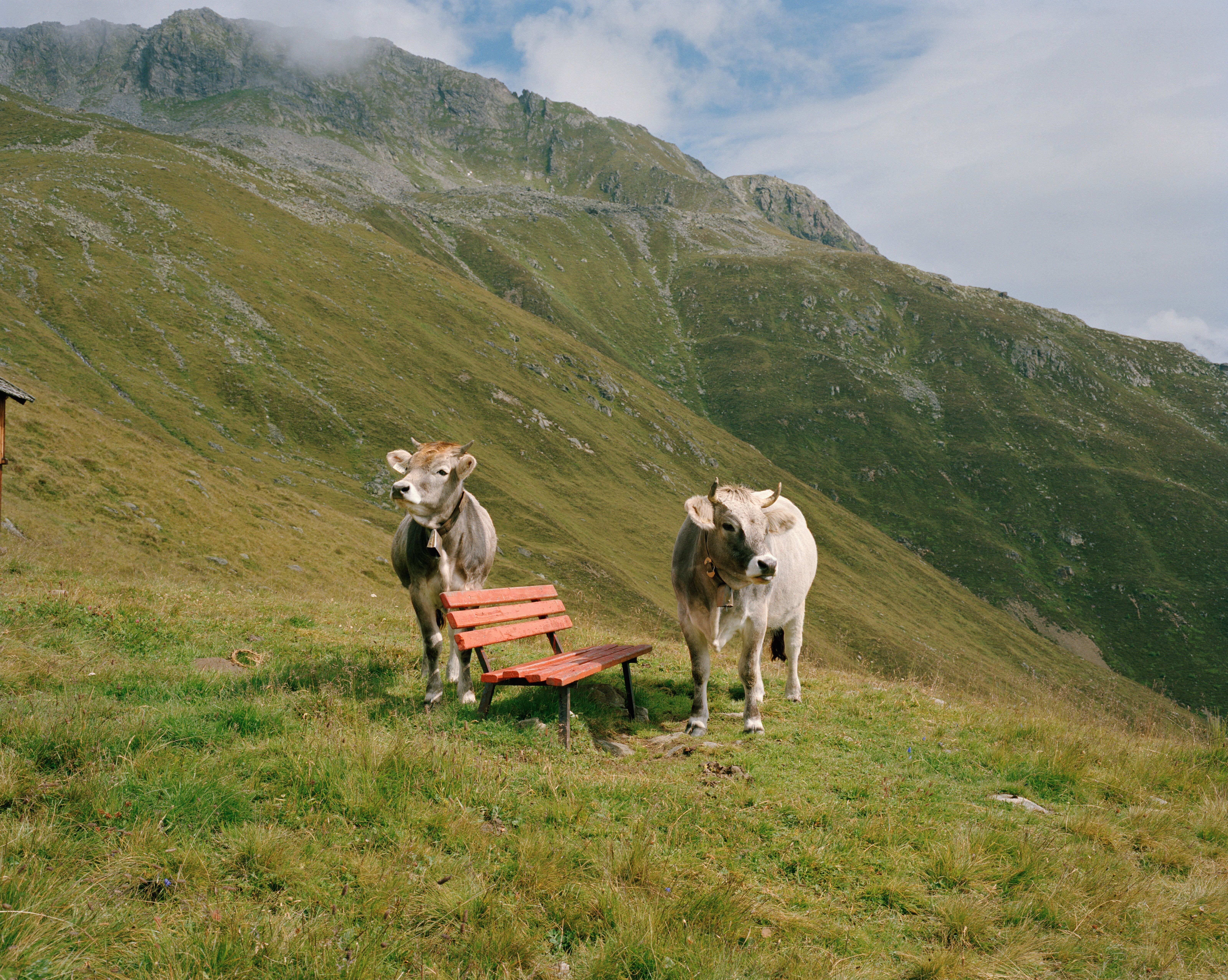

With over 2,000 alpine pastures, Tirol has the highest number of alpine pastures in the whole of Austria. These Alpine Pastures are not only popular attractions for day trips and places to relax, but are first and foremost areas used for agriculture. They provide the main source of fodder for cows, sheep, goats and horses that spend the summer on the extensive pastures, thereby making an important contribution to the food supply. At the same time, alpine meadows are among the most species-rich open-country habitats and play a vital role in preserving Tirol’s unique cultural landscape. For many hikers and Mountain Bikers, encounters with grazing livestock are therefore an integral part of the Alpine Pasture experience.
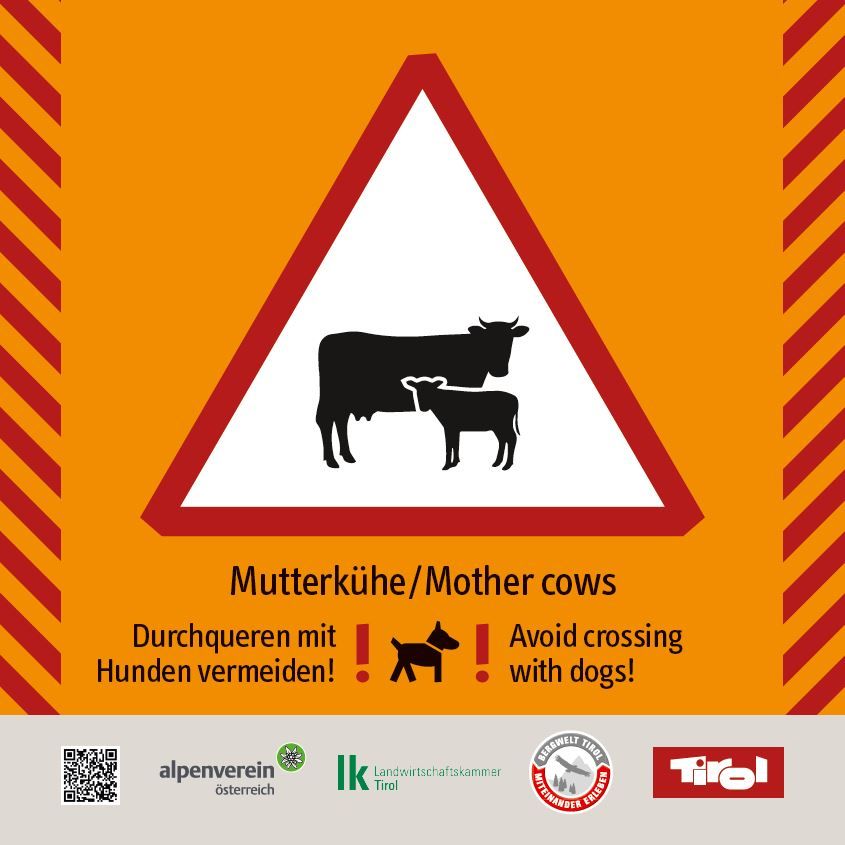
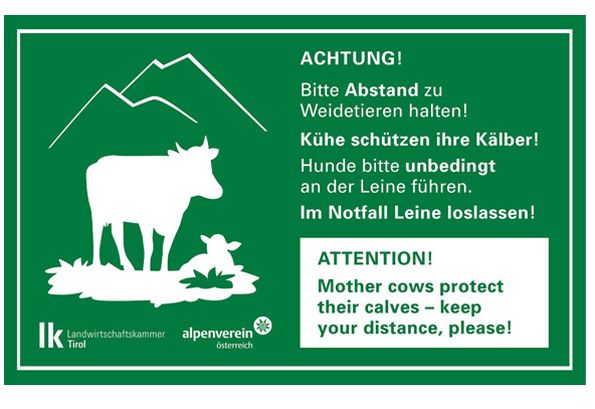
The grazing livestock on our Alpine Pastures are generally calm and peaceful. However, if the animals encounter dogs, this can cause agitation and trigger natural protective instincts. The fear of the wolf as a natural predator has remained with grazing livestock to this day. As dogs resemble wolves – regardless of breed or size – they can trigger strong protective reactions, particularly in mother animals. You should be especially vigilant around herds where mother animals are grazing on the Alpine Pastures together with their calves. In what is known as ‘suckler cow farming’, cows and calves remain together as a herd. The protective instincts of the mother animals are particularly strong in this context, which is why they can quickly perceive potential dangers to their young and react accordingly. As a result, dangerous situations for hikers or cyclists can arise in very rare cases. You should therefore be particularly vigilant around cows grazing on Alpine Pastures together with their calves.
Statistically speaking, incidents involving grazing livestock and walkers are rare. Observing the relevant information boards can further reduce the risk significantly. Nevertheless, it is advisable to exercise appropriate caution when encountering alpine livestock. To avoid dangerous situations, it is helpful to be familiar with the behaviour of the various animals and to be able to assess it correctly.
The agricultural infrastructure on the Alpine Pastures enables many people to enjoy this unique landscape for leisure purposes. With mutual consideration, Tirol’s Alpine Pastures are a safe and relaxing place for everyone – for people as well as for animals.
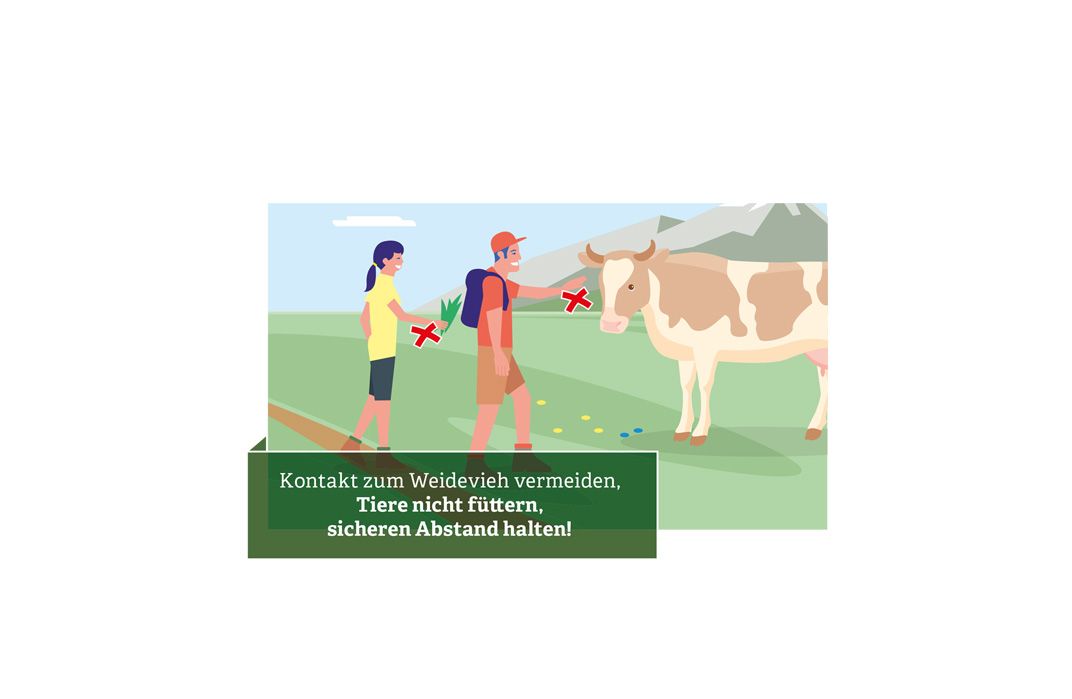
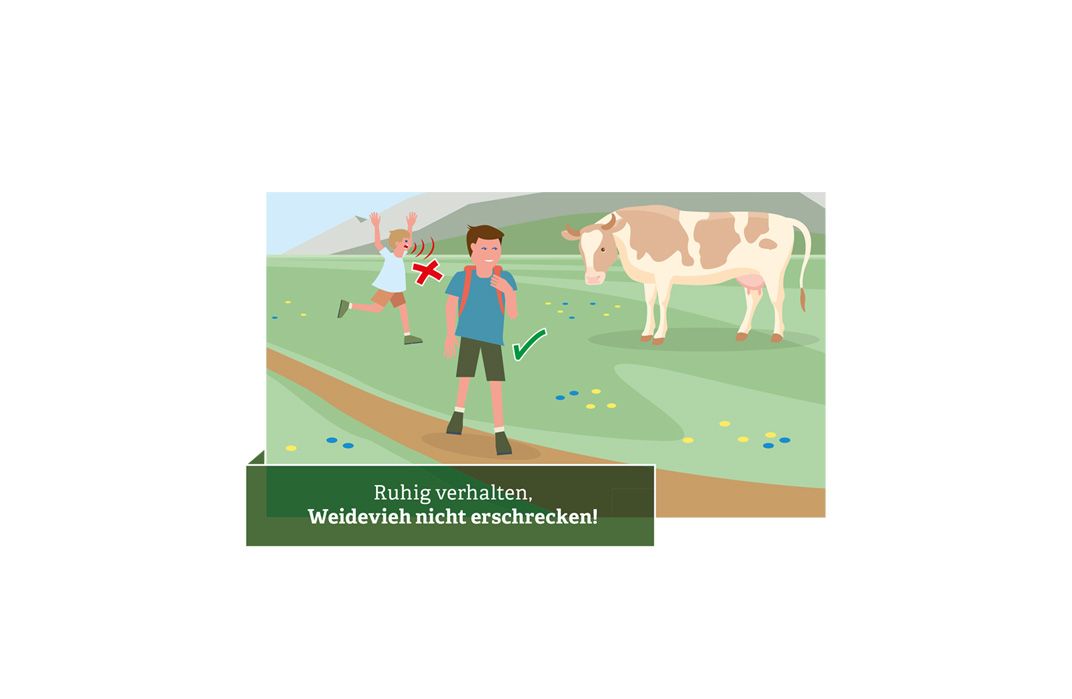
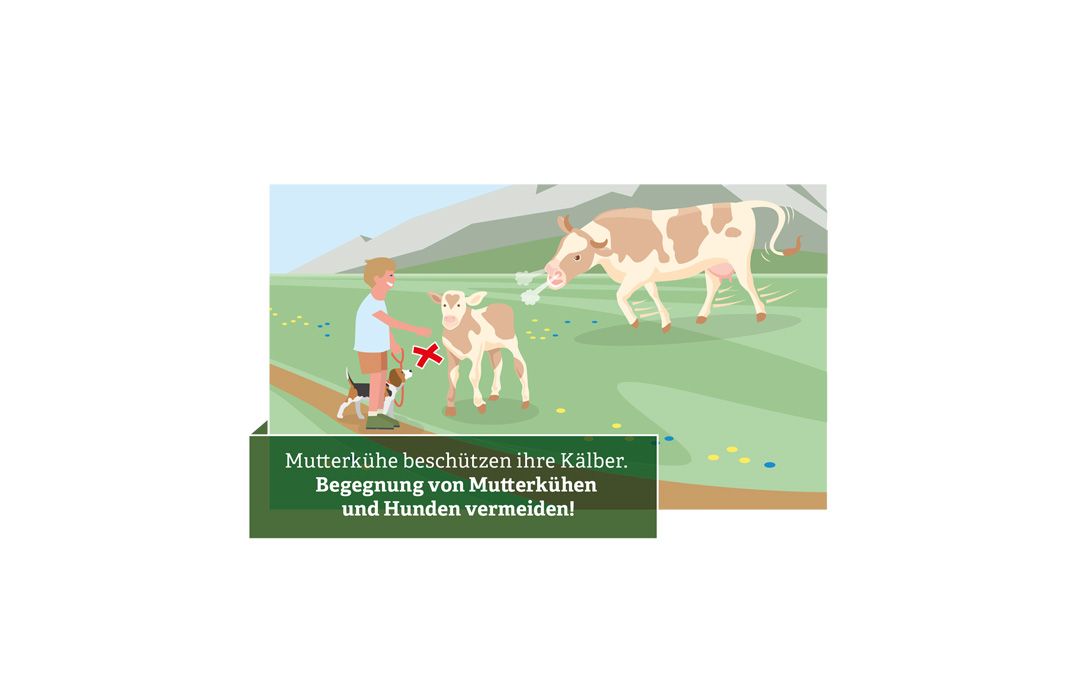
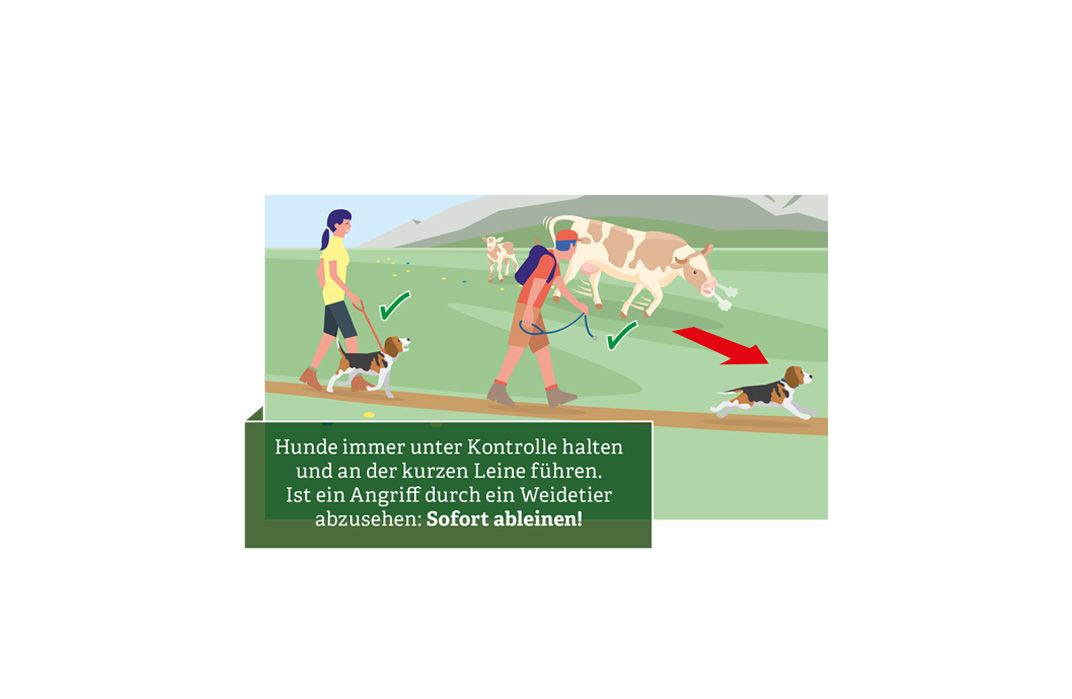
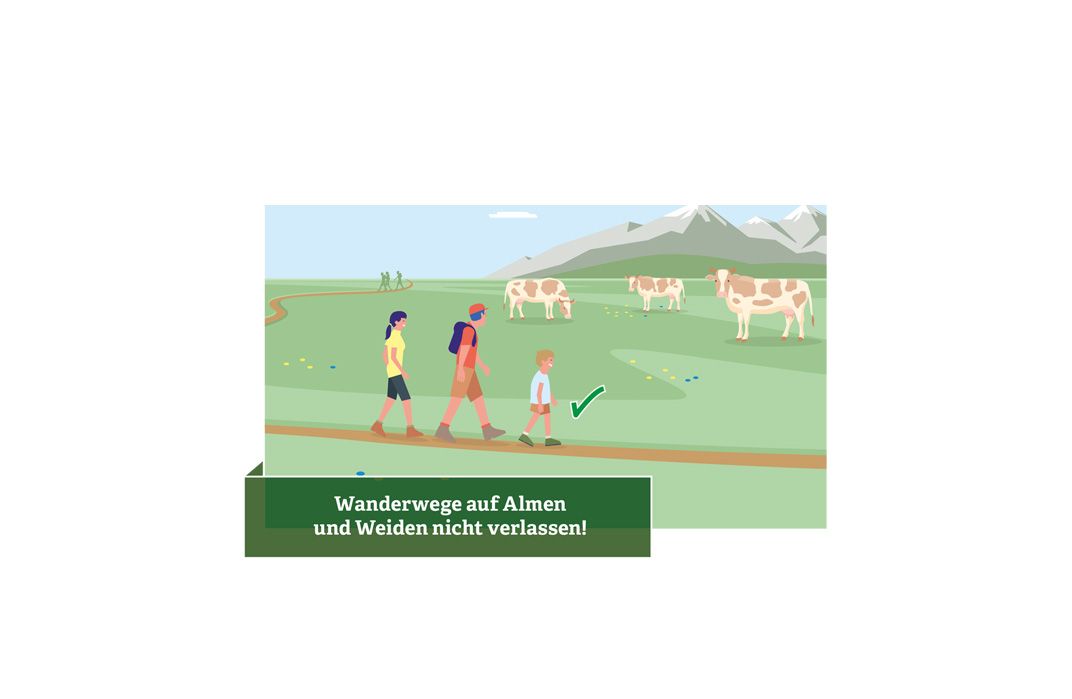
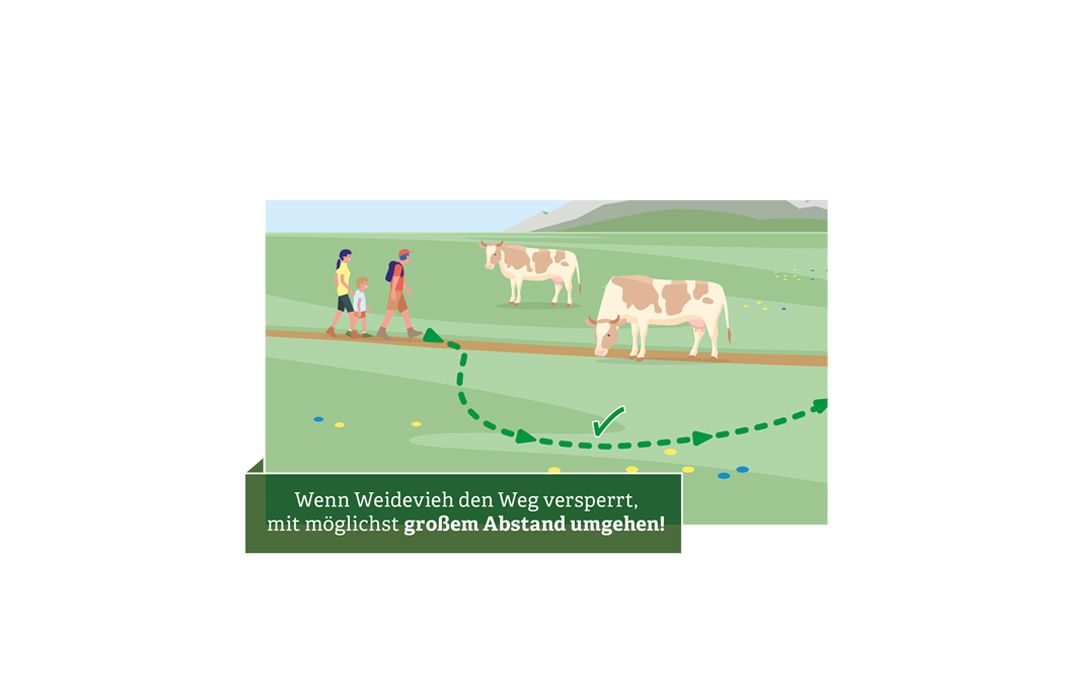
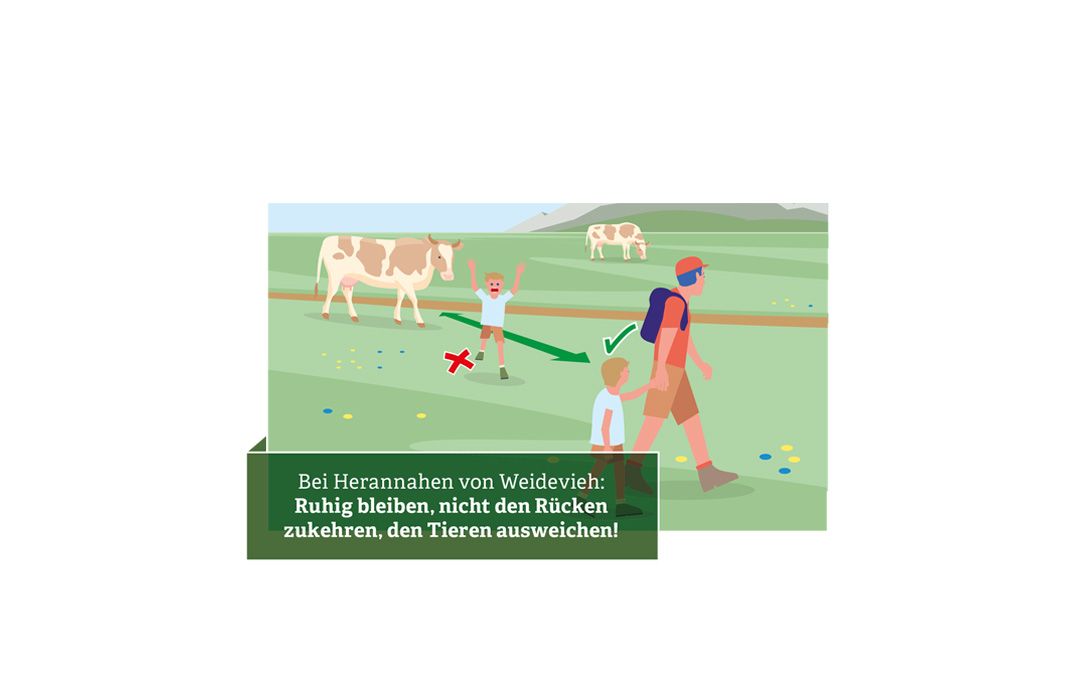
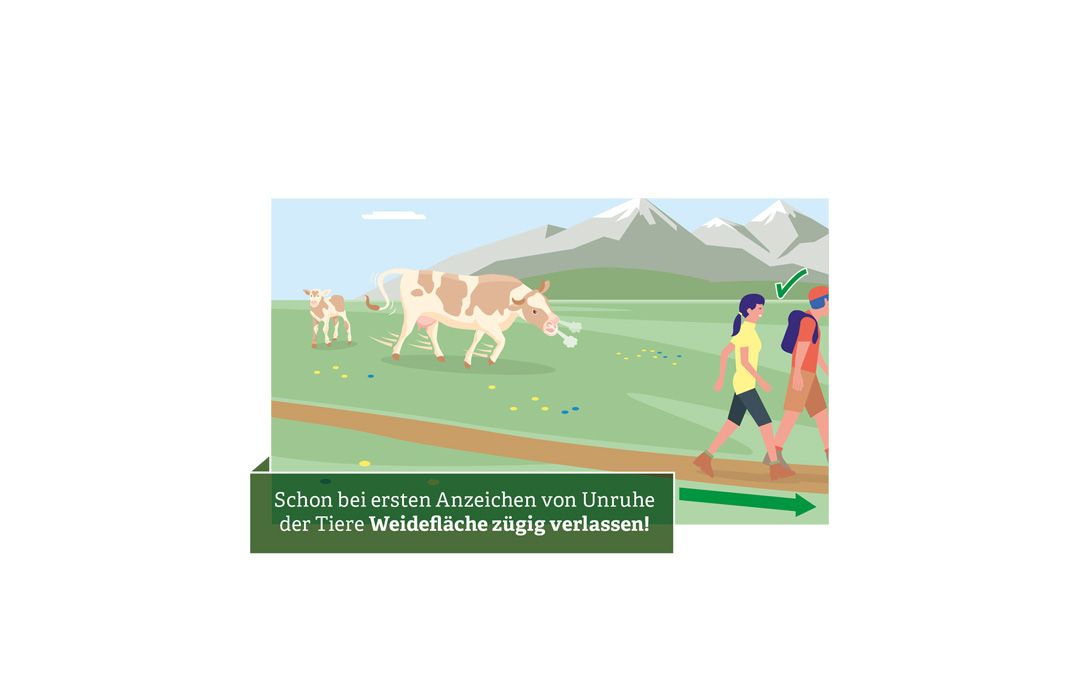
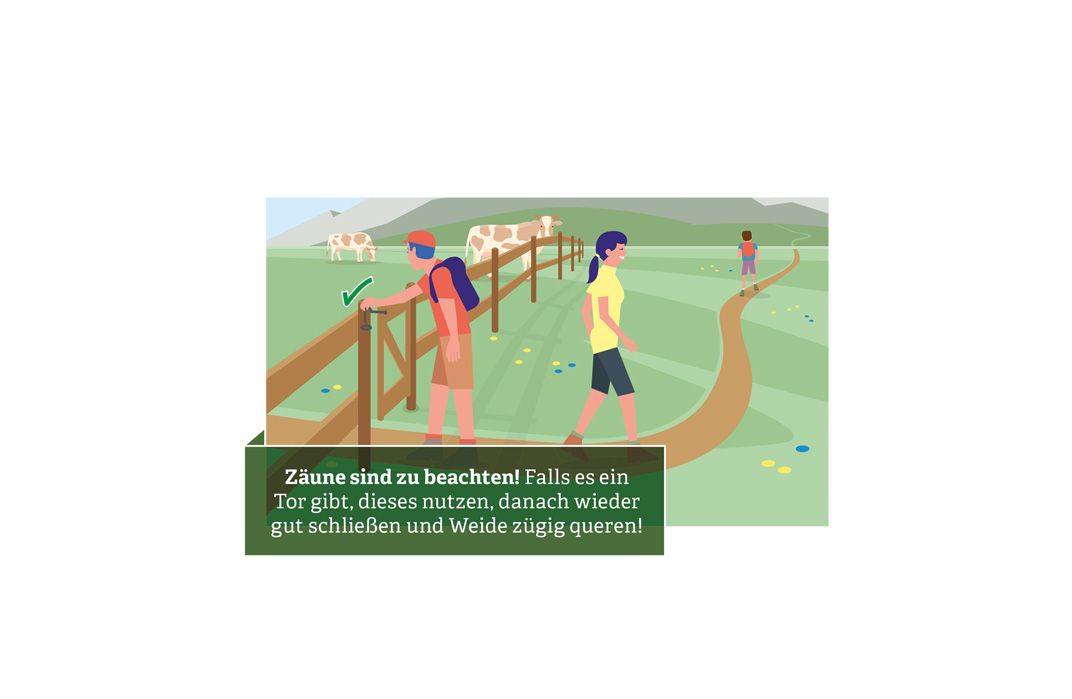
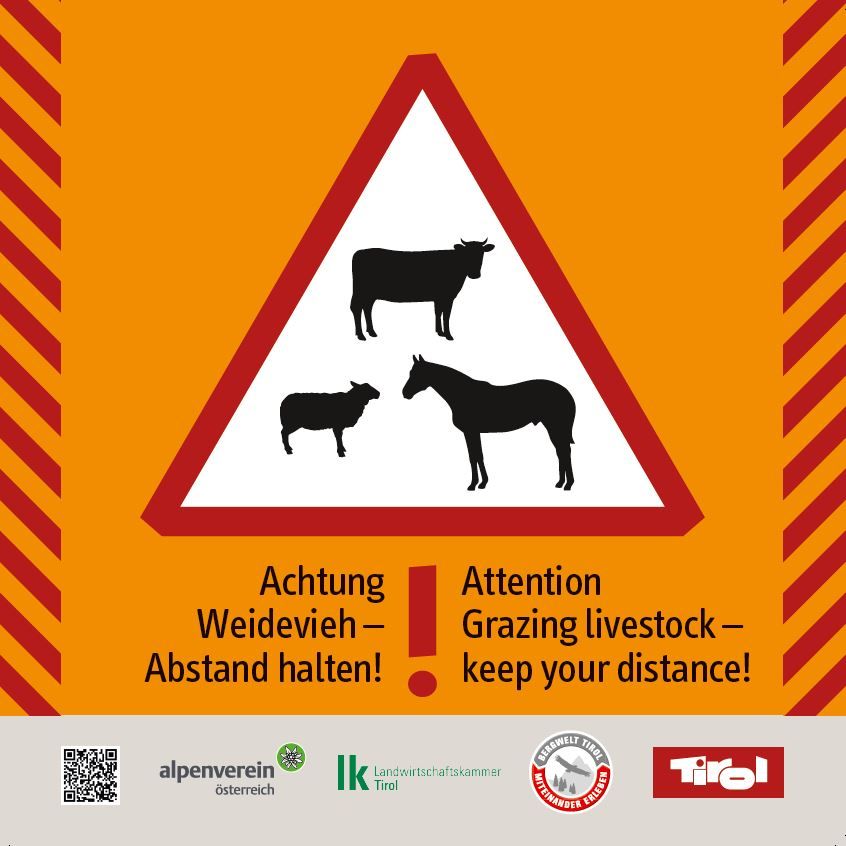
This signposting system guides mountaineers and other mountain sports enthusiasts past those areas of the Alpine Pastures where an encounter with grazing livestock is particularly likely, whilst ensuring they maintain a safe distance. This enhances safety on the Alpine Pastures – whether you are out walking, Mountain Biking or walking your dog.
Grazing livestock move largely freely across the alpine pastures. However, certain areas are used more frequently by herds, such as those near Alpine Pasture Huts or watering holes. If heavily used Hiking Trails also run through these areas, the likelihood of an encounter increases significantly. At these so-called ‘hot spots’, information signs raise awareness of potential situations and, at the same time, indicate safe alternative routes.