Unlike our more buttoned-up neighbours to the north, Tiroleans are happy to be on casual first-name terms pretty soon after meeting. In German this is expressed by using the informal "Du" form instead of the formal "Sie" form when addressing each other.
Informal:
Grias-di, Griaß-enk, Griaß-eich = Hello!, Good day!
Pfiat-di, Pfiat-enk, Pfiat-eich = Goodbye!
Derived from other languages, “Hello” and “Hi” are common greetings in Tirol nowadays. You will also hear "Servus" and the Italian “Ciao” when people say goodbye to each other. In towns and cities the disapproved-of German “Tschüss” is also common nowadays. In shops and restaurants it is likely you will be addressed in German using the formal "Sie" form.
Formal:
Grüß Gott = Good Day!
Wiederschaun = Goodbye!
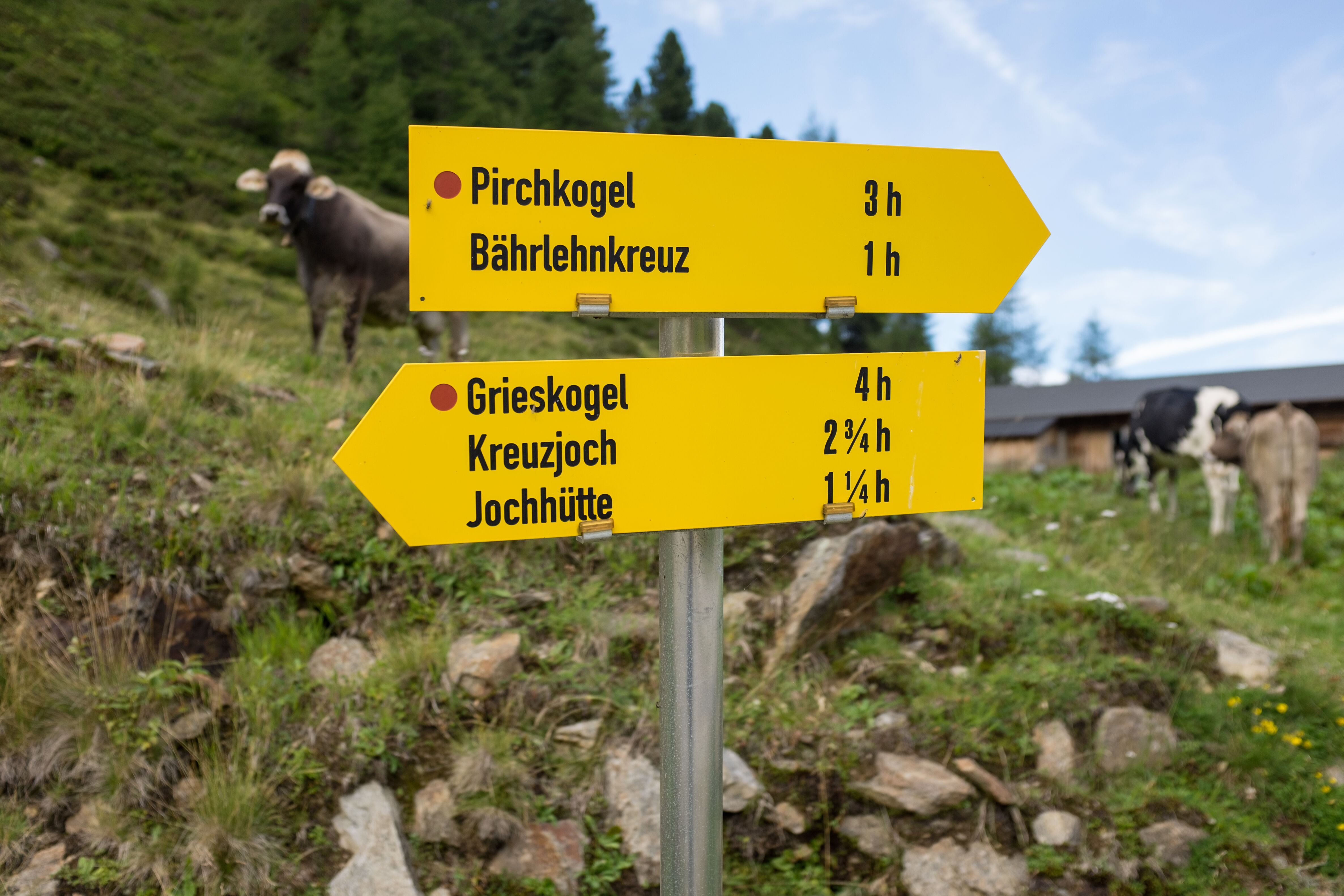
You will find these Tirolean expressions useful if you've lost your way or want to get to a particular place.
aui, auffi = up, upward(s)
umi = over, across
außi = out, out there, outside
oi, ochi = down
arschlings = backwards
grodaus = straight on, straight ahead
entn = over there
Bichl = hill. May look like a mountain to lowlanders, making it hard to navigate correctly. After all, the whole landscape of Tirol is formed by mountains. They are everywhere.
Schmotzgoggl = nice expression for a charming girl. Originally from the Brixental Valley.
Bissgurn = nasty woman.
Loamsieder = slow, boring person you probably don't want to spend much time with.
Lota, Weibetz = man, woman. You will sometimes even find these words on toilet doors in traditional mountain huts.
Lugntschippl = a person you shouldn't believe – known for lying or at least embellishing stories.
Dozn = a very small person. Also known as a Greggeler .
Lulatsch = the opposite of a Dozn – a very tall (normally thin) man.
Fackalar = somebody known for their outrageous sense of humour, telling jokes way below the belt that result in more cringing then laughter.
Sektnschlägl = a dissatisfied person unhappy with himself and the world. A person like this may be called mulat or sektisch.
wompat = somebody with a large beer belly ("Wampe").
schmattig = somebody with a lot of money – perjorative term that can also bring into question how the person has come about so much money.
potschad = used to describe somebody who is clumsy.
Zoggla = somebody who doesn't pay much attention to the way he dresses and may also be known as schlampert.
Zornpingl = an angry person who often works themselves up into a rage.
Popele = Baby
Poppenwagen = stroller
„in die Heia gehen“ = go to sleep
Springgingerl = A loving term for a lively child who can hardly sit still and prefers to be constantly bouncing around.
Derwischaletz, Fangalex = A popular chasing game for children, requiring little effort and playable almost anywhere.
Versteckalex = Find me! In shopping malls, bored children use this game to make their mothers abandon their shopping.
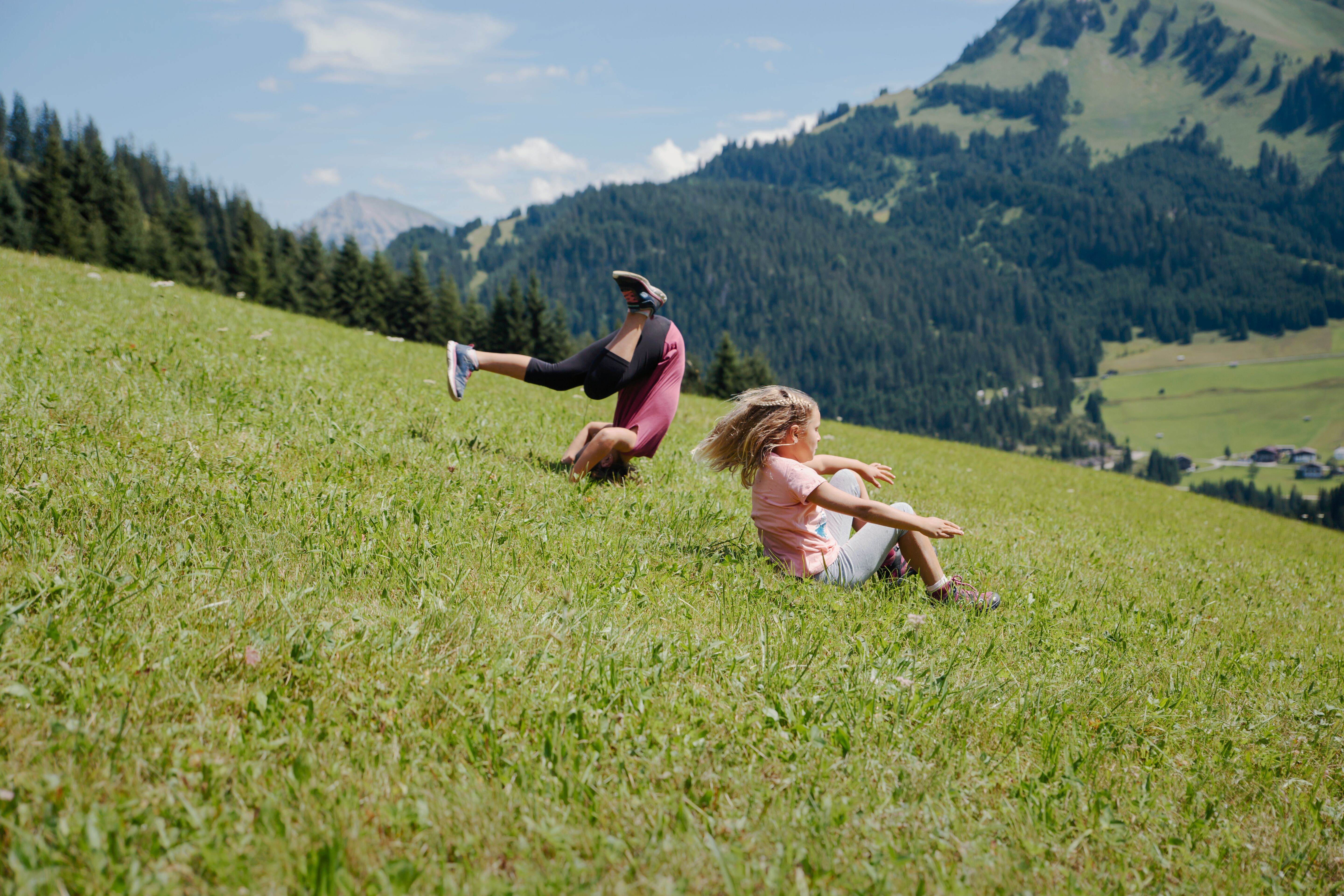
Purzigagele = Forward roll with the whole body. The term is known from the Tyrolean children's song: 'Die Buabelen, die Madelen, die machen Purzigagelen...' It comes from 'purzeln,' meaning to tumble or roll. Due to the required flexibility and playful energy, it is mostly done by children.
Gummihupfen = A once very popular game where a large rubber band, held by two children, served as a boundary that a third child had to jump over in a specific sequence.
Templhupfen = A game played on asphalt with squares drawn using sidewalk chalk, which is still enjoyed today.
Floschn drahnen = Spin the bottle. For slightly older children.
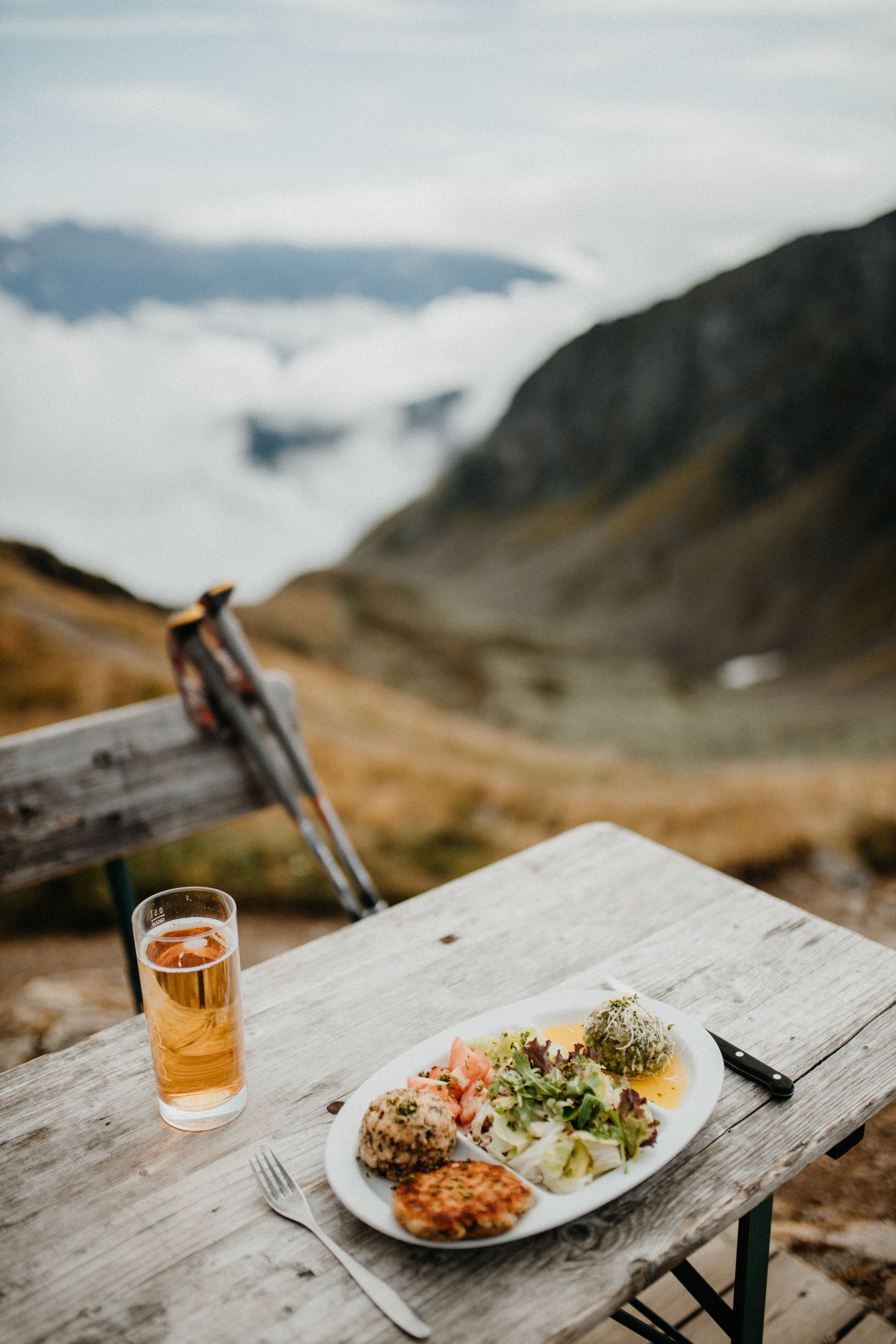
Kaasspatzln = literally ‘little cheese sparrows’; a kind of soft egg noodle mixed with grated cheese, oven-baked and sprinkled with fried onion
Greaschtl, Gröstl = a real Tirol favourite for generations, this meat, onion and potato fry-up tastes great served with a fried egg
Kaaspressknedl = flat bread dumplings that are filled with onion and cheese and cooked until golden brown on both sides. Cheese dumplings are served in a hearty beef broth or with sauerkraut
Fleischkaas = type of meat loaf made of ham and pork or veal, sometimes including liver
Graukaas = literally ‘grey cheese’; a strongly flavoured, rennet-free cows-milk acid-curd cheese. It owes its name to the grey mould that usually grows on its rind, is extremely low in fat and has a powerful penetrating smell. You either love it or hate it!
Schwammerlen = mushrooms, commonly used for the “golden chanterelle” (“egg mushroom”), which has a magical appeal for culinary experts
Muas = mush, puree
Goggelen = eggs
Weggn = bread
Oranschn = orange
Melanzani = eggplant
Marilln = apricot
Verlängata = sounds like an indecent proposal, means “extended one” and is a cup of coffee, typically served with milk
Zol’n bitte! = The bill, please!
Hots gschmeckt? = Was everything all right? Did you like your dinner?
Mogsch a Schnapsal? = “Would you like some schnapps?” Tirol is on the bucket list of schnapps lovers near and far. Local craft distillers produce flavours you’ll only find here, so, if asked friendly you are strongly recommended to seize the opportunity to savour the fruit of their work. Schnapps has the power to bring people together!
botzn = spill, drip
Botzerei = messy eating
botzn, patzn = to spill, Botzerei, Patzarei = to spill at the table
Um den Speck is a Griß = The bacon is in great demand.
Hotsgschmeckt? = Was the food to your satisfaction?
tzutzln = to suck, for example on a straw
Zol'n please! = The bill please!
And the question of all questions:
Mogsch a Schnapsal? = This refers to a real "Selberbrennta", a home-distilled schnapps of the highest quality. Most of the time anyway. You should accept this friendly offer. Extremely unifying.
Here are some Tirolean phrases for dating and romance that can be quite helpful on folk fests, village fairs and marquee festivals. There is rarely any German spoken on these special occasions.
Honestly speaking, never ever.
Fesches Madl, Diandl = beautiful woman, beautiful girl, pretty lassie
Fescher Bua = handsome lad
Wia hoaschn du? = What’s your name?
Mogsch wos trinkn? = Can I get you a drink?
Woher kimmschn du? = Where do you come from?
Mogsch di herhockn? = Do you want to take a seat?
Du gfolsch ma! = I like you!
I mog di. = I like you.
A Hetz machen = Having fun
hetzig = funny, jolly, amusing
losnen = listen
trotschn = natter, chatter, gossip,
terisch = hard of hearing. “I wear terisch” – I can’t hear a word (comes in handy during a brass band concert)
tamisch sein = being off form, under the weather, fig. dizzy (as a result of dancing polka, for example)
rauschig sein = tipsy
Weiss-Sauer, Rot-Sauer = white wine spritzer, red wine spritzer
Kracherl = similar to “Almdudler”; a sweet, alcohol free lemonade with a herbal twist
Zschigg = cigarette (Note: smoking is prohibited in many indoor public places in Tirol, including marquees)
Beware! If you should happen to hear these words spoken with a serious and/or angry face, you just might have gone over the top and are strongly recommended to take to your heels: “Watschn” or “Fotzn” are Tirolean terms for “a slap in the face”. “I schmier da oane” means “you deserve a box round the ears” and should be seen as a form of disapproval as well… Don’t worry, as mentioned before, the Tiroleans are very friendly and welcoming in general. If you behave properly, you will not get in trouble.
If you hear the following words with a serious face, then perhaps you were a little too impetuous in your flirting and should rather look the other way: "Watschn " or "Fotzn" are expressions for "slap in the face". "I schmier da oane" is also to be understood as an indisputable rejection and has absolutely nothing to do with buttering a sandwich... Fortunately, the Tyroleans are generally friendly, sociable and if you behave normally, you have nothing to fear.
You might find these Tirolean phrases helpful when talking about your health. Or, you might just find it funny how we call certain things.
Dokta = Doctor
Apoteggn = Pharmacy
Binggl = bump, swelling, bruise
Buggl = back
Wea = pain
Mir isch letz = I feel sick
Speiberei = stomach flu, or gastroenteritis
Haxn = legs
Zeachn = toes
Goschn = face
Zennt = teeth
Gnagg = neck
magiern = pretending to be sick
Heisl = toilet, bathroom (not a house!)
Plumpsklo = predecessor to the “Heisl”, pail/earth closet. Has now been almost completely replaced by the water closet. Can be found at some quaint old mountain lodges, with a heart cut-out door.
gschleinen = hurry (sometimes needed in connection with “Heisl”)
Enjoying the great outdoors of Tirol you might come upon these words.
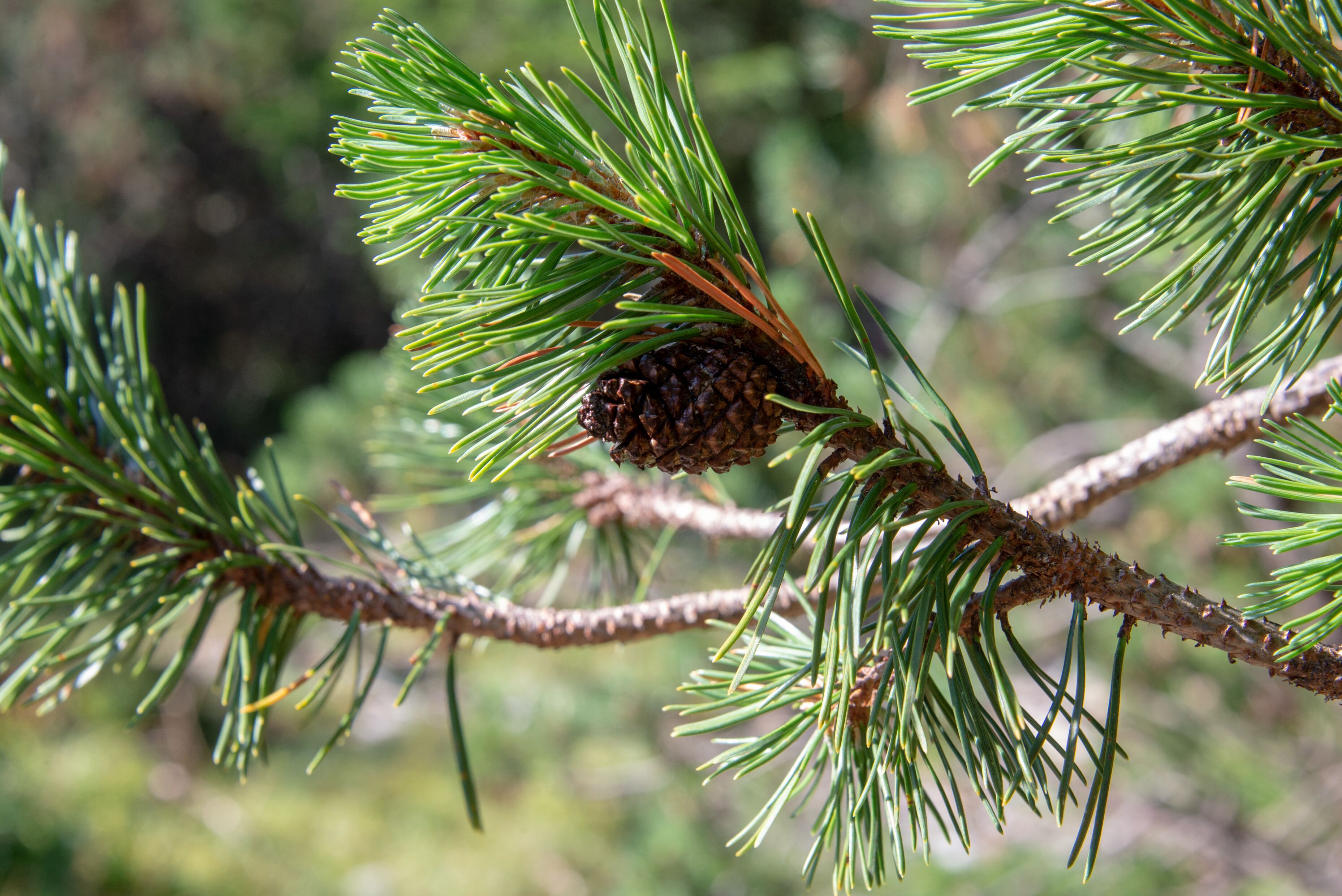
Tschurtschn = (fir) cone
Viecher = animals
Murmele = marmot
Goas = goat
Anten = ducks
Baam = tree
Oachkatzlschwoaf = A Tirolean slang word for the tail of a squirrel. Often used to proof if someone was Tirolean because Non-Tiroleans can’t pronounce it. Those who can nevertheless, will receive the highest achievable recognition.
Phrases are rather interesting and they add flavor to our language, but with so many of them existing, eventually you will run into some that you’re not familiar with.
“Isch des bärig! ” = Wow!! That’s amazing! That’s wonderful!
Phrases like “geil” and “cool” reflect modern, colloquial Tirolean usage, often strengthened by “volle”, i.e. “volle cool”
“Mei schian!” = Oh my that’s awesome!
“Na schiach!” = Something very ugly or hideous. Also expressed with “zach”, meaning badly, severely
ge! = “I can’t believe that!”; stressed with regretful intonation: “ma ge hey!” (“That is really unbelievable!”)
ge? = “eh?”, “right?” Used at the end of a sentence when you’re not really asking a question, more providing a statement that you want confirmation for such as “it’s really hot today, eh”
ha? = “What?”, “Pardon?”
a = also, too, as well
amol = once
decht, dechtasch = but, however
eh = anyway, anyhow, that goes without saying, absolutely
epper = somebody, someone
es = pl. you
lei = only, just
woll = but, however
nimma = not more
nocha, nochand = afterward(s), later (on)
olm = always, all the time
ondersch = different
Have fun and practise your Tirolean and you’ll be good as gold :)
By the way, anyone, well, almost anyone can learn to talk like a Tirolean as you can see in this video:
In his work "Innsbrucker Karpfen, Bozner Seligkeiten" (Athesia, 1988), the now sadly deceased folklorist Friedrich Haider has painstakingly compiled a collection of nicknames, nicknames of derision and nicknames that neighbouring villages in Tyrol are said to have given each other long ago - and in some cases still do, often behind closed doors of course. In the foreword to his book, Haider emphasises that he did not want to offend anyone with this work, but only wanted to protect old folklore from being forgotten. So please don't take it personally! In any case, I had to smile a lot. I would like to present some of my personal favourites from the book here (mostly excerpts from the original text).
Bitzler
That was the Ischglers, because in Ischgl they say "a bitz" instead of "ein bißchen". The "das bißchen" was supposedly a reference to the sunshine, which is generally not abundant in the Paznaun Valley.
Gealrubeler
This was the name given to the inhabitants of the communities on the Arlberg. A particularly large number of yellow turnips (carrots) were once grown there.
Sunnaluahner
These were the people of Lermoos who supposedly preferred to lean in the sun rather than work.
Zipflkappa
Also the people of Lermoos. They were given the nickname "Zipflkappa" by the people of Ehrwald because they are said to have always worn thick woollen caps, even at the regulars' table.
Ofentürler
This is what the inhabitants of Bschlabs were called. There is also an explanation for this: A Bschlaber (not "Bschlabser"!) allegedly had a new oven door made. Since he didn't have a tape measure to hand, he measured it with his arms spread wide. So he walked two kilometres to the blacksmith. Of course, the "natural size" had changed in the meantime and the oven door didn't fit.
Ofenschliefer
Decades ago, the Arzler lads are said to have hidden in an oven during a brawl with the lads from the Wald district.
Krotnmelcher
Frogs and toads had made themselves at home in Polling's acidic and mossy meadows. Whether these were really milked by the people of Polling is rather doubtful in my opinion.
Talfer Hoa
This nickname goes back to the Telfer people's habit of often saying "hoa" to emphasise something, such as "Kimmsch heit no, hoa?" (Still coming today, are you?)
Schmuggler
Once the people of Scharnitz. No need to explain in detail.
Fischsinger
The Pettnauer. There's a story about this: before the various regulations, the Inn filled the entire valley at Pettnau. Many of its tributaries ran through the Pettnau meadows and formed ponds and pools. In addition to farming, fishing was therefore an additional source of income for the people of Pettnau. One day, a colourful trout was caught from one of these ponds. They had never seen such a splendid specimen before and after much deliberation they agreed: It was not a fish, but a bird. And so it had to be able to sing. But it couldn't, so they taught it. However, the "bird" succumbed to the agony of learning to sing, and one Pettnauer said regretfully: "But dear Vogl was so eager (docile), he had already opened his mouth wide, and before he could make the first notes, he died!" Not a good story for animal rights activists.
Innsbrucker Karpfen
Similar story to the Pettnau fish singers. A beautifully colourful carp was caught here. The mayor sentenced the supposed "bird", which refused to sing at all but only opened its mouth, to death by drowning. Which certainly pleased the carp.
Höttinger Nudelsetzer
There is a story about this. The (once) poor inhabitants of Hötting (which, incidentally, was a village in its own right until 1938, even the largest in Austria) thought that instead of always buying expensive flour for production, they could simply grow the pasta. It worked with peas too! Unfortunately, there was no pasta harvest. The carnival newspaper "Höttinger Nudl" still exists today and recalls this anecdote.
Haller Kübel
During an Ascension Day celebration in Hall's parish church, the rope used to pull the figure of the Saviour up into the air apparently broke. The statue fell to the ground and broke. The individual pieces were then collected in a bucket and pulled up again, true to the principle: "Aui muaß er!" You just have to know how to help yourself.
Yellow-bellied
It is not known whether the Weerbergers are so called because of the common yellowhammer (bird species) or because of the yellow breast patch in their costume. It is also said that "there are three kinds of people: Manderleut, Weiberleut and Weerberger". Whatever that may mean.
Weggalfresser
The people of Thierbach did not have their own bakery. When they came to the Inn Valley, they liked to buy a Weinbeerweggele and eat it with relish on the way home. Even today, the people of Thierbach still say "Wett ma a Weggal?"
Mattiger Kälber
The people of Lienz gave the people of Matrei the name "Mattiger Kälber", probably to express the fact that the Mattiger lifestyle was too coarse for a town.
Virger Drahle
The people of Virgen don't get off well with the people of Matrei, they are called the Virger Drahle. The Iseltal people understand Drahl to mean "being twisted", word twisters, insidious and false, also cunning, clever, gaining an advantage.

"Die blede Funsn kun ma in Buggl oirutschn!"
Literally: The stupid woman can slide down my back!
Meaning: From now on I don't care about this woman, who is behaving quite stupidly.
"Because of the story printer, I'm now the loser!"
Literally: Because of this story printer, I'm now the loser.
Meaning: Because of this dishonest man, I'm now the loser.
"Der Goschate kuma die Schuach aufblosn!"
Literally: The man with the big mouth can blow my shoes open.
Meaning: The man, who is very insensitive in his choice of words, can do what he wants, I'm no longer interested.
"Iatz schaugsch oba, dass Metta gwingsch!"
Literally: But now you're looking to win metres!
Meaning: Now you have to hurry up and get away from me, otherwise something will happen!
"Verfluacht nomol eini, was glabt'n der Saufratz, wer er isch?"
Literally: Damn it again, who does this naughty kid think he is?
Meaning: So really, who does this naughty kid think he is that he can get away with this?
"Halt di Goschn, du Hallodri!"
Literally: Shut up, you rascal!
Meaning: Say no more, you unpredictable, light-footed guy!
"De Schnapsdrossel isch fett wia a Haisltschigg."
Literally: This boozer is as fat as a house cigarette.
Meaning: This drunkard is as drunk as a cigarette disposed of in the toilet.
"Kruzifix noamol eini, wia ischn das passiert?"
Literally: To the crucifix again, how did that happen?
Meaning: Yes, tell me, how could that happen?
"Such a piece of rubbish, what the fake fifty sold me."
Literally: Such inferior stuff, what this fake fifty sold me.
Meaning: What this dishonest person sold me is of very poor quality.
"De fade Nockn isch a Obizahrerin!"
Literally: This boring cam is a down-and-out.
Meaning: This boring lady is so demotivating.
"I glab dem Schmähtandler gor nix mehr."
Literally and meaningfully: I don't believe this liar anymore.
"Hergottzagra, de Beißzangen isch aber a Kretzn!"
Literally: Lordship times, but these biting pliers are scabies.
Meaning: For God's sake, this unfriendly person is really obnoxious.
"Da neie Haberer von dem Schragen isch a Lulatsch."
Literally: The new guy from the ugly woman is a tall man.
Meaning: The new boyfriend of this not-so-attractive woman is of tall stature.
"Sei net so a Gschaftlhuaba, du woasch ja a nix!"
Literally and meaningfully: Don't be such an important person, you don't know anything either.
"Der Sumser geat ma aufn Zoager!"
Literally: This Sumser gets on my nerves.
Meaning: This nag annoys me.